
NEWS
Trump’s infamous White House ballroom and bunker have been all but scrapped by a federal Judge and the national preservation committee.

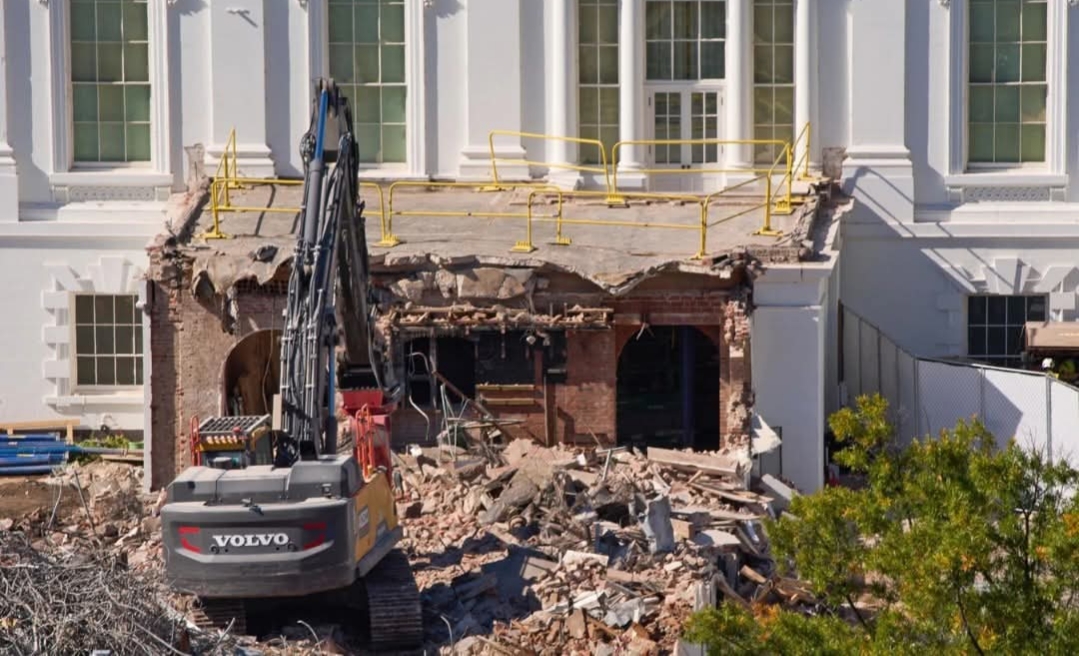
Washington woke up this week to a scene that feels less like politics and more like the final act of a demolition derby.
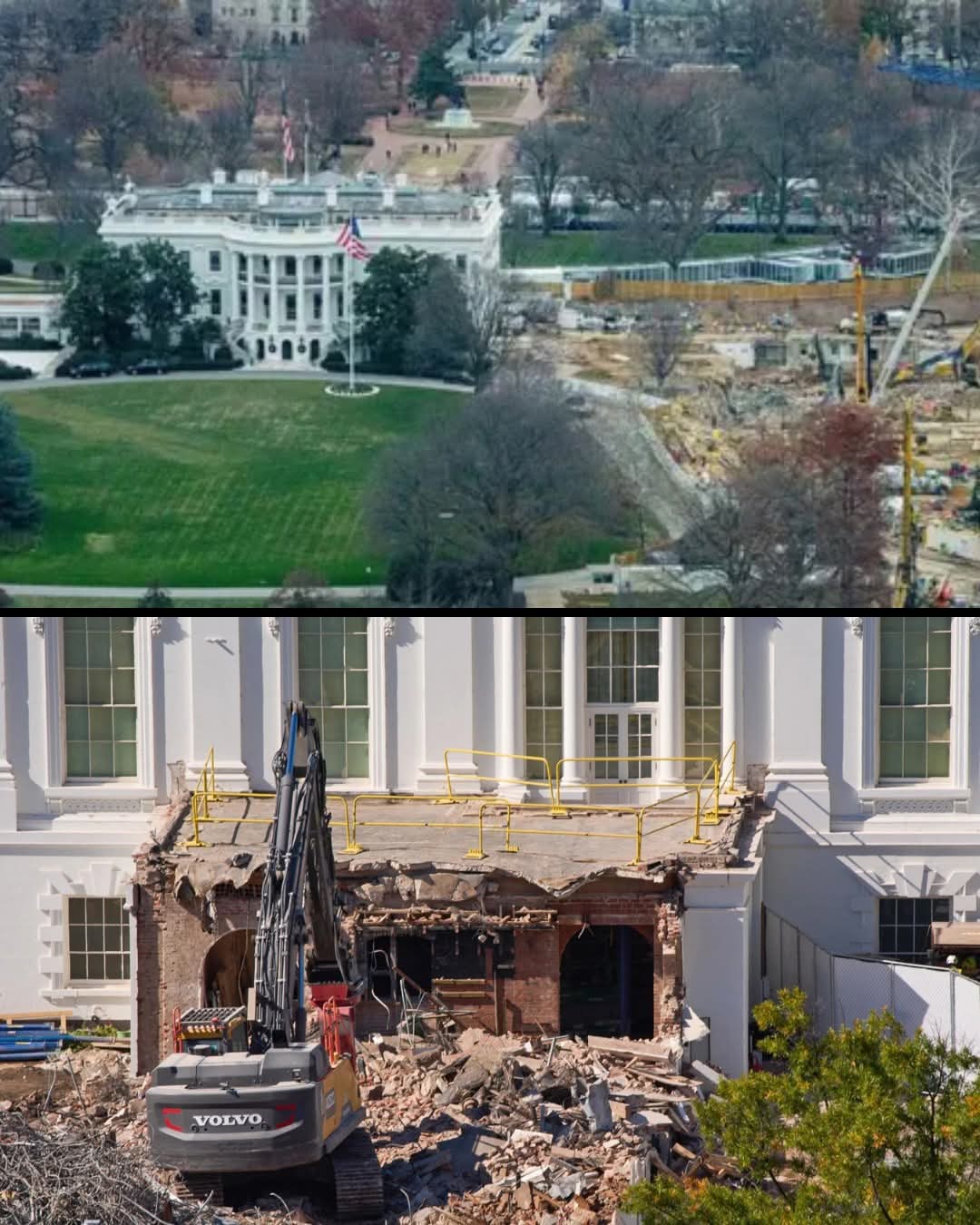
The East Wing of the White House — first constructed in 1902 and later renovated in 1942 — now sits in rubble. Bulldozers and skip loaders have reportedly cleared away what was once a historic extension of the executive residence, leaving behind churned earth and a stunned preservation community asking the same question: how did it get this far?
At the center of the storm is former President Donald Trump’s long-discussed White House ballroom project — a lavish addition he had floated publicly for years. Supporters framed it as an upgrade, a glamorous expansion befitting state dinners and high-profile events. Critics warned it was a vanity project wrapped in patriotic language. Now, after a federal judge and the national preservation committee effectively halted the plan, the proposed ballroom appears to be all but scrapped.
And that’s only the beginning.
The controversy deepened when questions surfaced about the reported $400 million raised through private donors for the ballroom’s construction. According to allegations circulating in legal filings and media reports, there has been little to no public accounting of the pledged funds. No detailed transparency reports. No clear paper trail outlining where the money sits — or whether it was ever fully secured in the first place.
Was it pledged and withdrawn? Was it raised and reallocated? Or did it never materialize beyond high-dollar promises made in private rooms? The silence surrounding the financial pipeline has fueled suspicion across the political spectrum.
The legal turning point came during a heated hearing in which a federal judge sharply criticized the administration’s defense of the demolition. When a government lawyer reportedly attempted to compare the removal of the East Wing to renovations made during the Gerald Ford administration — including the installation of a swimming pool in the 1970s — the judge interrupted with visible frustration.
“Come on, be serious,” the judge snapped, signaling that the court did not view the comparison as remotely equivalent.
Preservationists argue the East Wing was more than bricks and drywall. While it was not part of the original 18th-century White House core, it carried more than a century of administrative and symbolic history. It housed offices for the First Lady and her staff, coordinated major events, and functioned as a logistical backbone for White House operations. Its demolition — particularly if deemed procedurally improper — represents, in their view, a cultural and architectural loss that cannot simply be reversed.
Now, instead of blueprints for a glittering ballroom, the General Services Administration reportedly faces the more mundane task of hiring contractors to fill the cleared site with dirt and sod — essentially restoring the ground where the structure once stood.
No ballroom. No wing. Just flattened earth.
The symbolism is hard to ignore.
For Trump’s critics, the situation reinforces long-standing concerns about blurred lines between private fundraising and public office. They argue that even the appearance of donor money flowing into a project tied to a sitting president — especially without transparent oversight — erodes public trust.
For Trump’s allies, the narrative is different. They contend that the ballroom was intended to modernize White House event space at no taxpayer expense, funded voluntarily by supporters. From that perspective, political opponents and bureaucratic resistance thwarted a private effort to enhance a public building.
Still, the unanswered financial questions loom large. In an era where every dollar connected to public institutions is scrutinized, the absence of clear documentation becomes its own headline.
Meanwhile, historians warn that once a historic structure is demolished, restoration is never truly restoration. It becomes replication — a copy of something that once stood, not the original artifact. And if the court ultimately bars reconstruction or redesign at the site, the East Wing as Americans knew it may remain part of the past.
The broader political fallout could extend far beyond architecture. Legal analysts suggest investigations into the donor funds could intensify, particularly if discrepancies emerge between public statements and financial records. Transparency laws, nonprofit reporting requirements, and federal ethics standards may all come under renewed examination.
What makes this episode especially explosive is the collision of three volatile elements: history, money, and power.
The White House is not just another government property. It is a symbol — carefully preserved, politically charged, and globally recognized. Altering it has always required layers of review and bipartisan sensitivity. To see one of its wings reduced to debris without a completed replacement ready to rise in its place feels, to many, like a gamble that didn’t pay off.
Whether this becomes a footnote in a long political saga or a defining scandal will likely depend on what happens next. Will there be a full accounting of the $400 million? Will investigators determine whether funds were mishandled, misrepresented, or simply misunderstood? And will any future administration attempt to rebuild what was lost?
For now, the only certainty is the image: bulldozers scraping across historic ground, dust rising where a century-old wing once stood, and a courtroom echoing with a judge’s exasperated plea for seriousness.
In Washington, symbolism is everything. And right now, the symbolism looks like a hole in the ground.
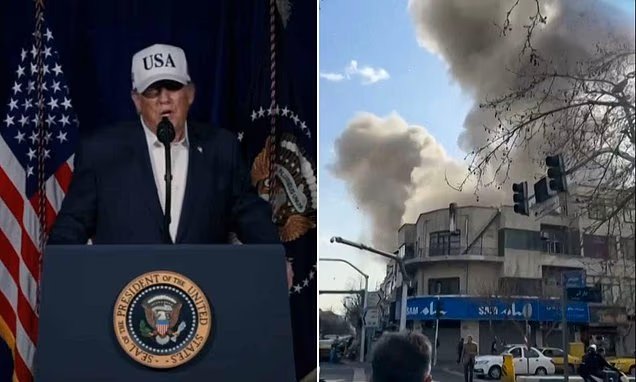
BREAKING: Iran attacks US 5th fleet in Bahrain after Trump launched ‘massive’ US and Israeli attack on Iran

Donald Trump is issuing an executive order declaring a “national emergency” to give himself unprecedented powers over elections. The order could allow him to interfere with voting ahead of the midterm elections.

BREAKING: Donald Trump is reportedly “raving mad” that Democrats will be broadcasting a live feed of his SOTU speech tonight from a thermal camera that shows if he poops himself, and is furious that this “Trump Dump Detector” could get more viewers than the regular broadcast.

BREAKING: The Republicans deposing Bill and Hillary Clinton over the next two days are reportedly extremely nervous because Donald Trump—very out of character—hasn’t said a word about it, and they’re afraid the Clintons’ answers might lead to the end of Trump’s presidency.

At the 2026 State of the Union, Sen. Markwayne Mullin Tries to Snatch Rep. Al Green’s “Black People Aren’t Apes” Sign Referencing Donald Trump’s Truth Social AI Post Depicting the Obamas as Apes — Green Files Criminal Assault Charges, Says Mullin “Doesn’t Like the Truth Seeping Through,” and Claims His Explanation Shows He’s Desperate to Please Trump

JUST IN: Minnesota Gov. Tim Walz calls for the U.S. to pass a law requiring that when Congress votes to go to war, an immediate family member of each member of Congress must immediately be enlisted. See Trump’s Enraged 6-Words Reaction

Appointed AG Jack Smith had 86 witnesses ready to covict Donald Trump for attempting a goddamn coup and all of them were Republicans. His report was then blocked by Trump appointed Judge Aileen Cannon.

BREAKING: Taylor Swift and Travis Kelce’s Secret Vacation in Mexico Turns Tragic in Puerto Vallarta as Mexican Cartel Sets Fires, Pulls People from Their Cars, and Burns Vehicles After a Cartel Leader Was Killed — With Heavy Hearts, Sources Confirm the Couple Has Been…

JUST IN: Greenland PM Jens-Frederik Nielsen says: “President Trump’s idea to send a US hospital ship here to Greenland has been duly noted. But we have a public health system where care is free for citizens.”

JUST IN: Denmark just officially rejected President Trump’s sudden deployment of a “great hospital boat” to Greenland, bluntly declaring the territory does not need foreign healthcare

BREAKING: Top GOP pollsters warn that if Trump keeps tariffing the world, and starts a war in Iran, and doesn’t arrest any other Epstein pedophiles, and keeps stealing billions of tax dollars, “The Dems will win enough Senate seats to impeach him and JD for President Jeffries.”
