
NEWS
BREAKING: Trump just announced that the U.S. will contribute $10 billion to his Board of Peace from U.S. Taxpayers money which he called “a very small number”, while IGNORING Congress Approval

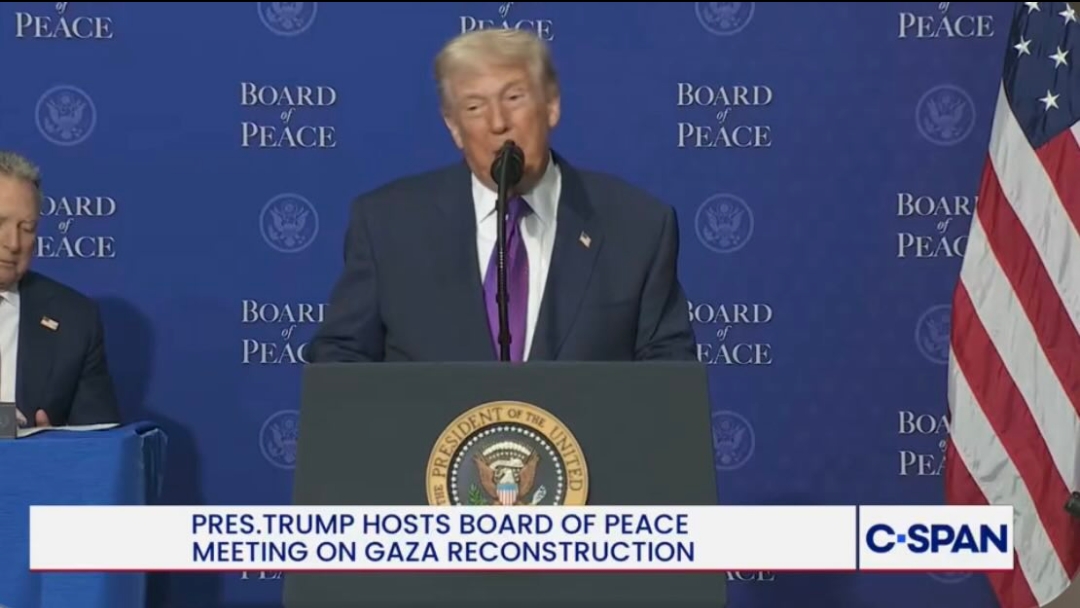
Trump Just Announced the U.S. Will Contribute $10 Billion to His “Board of Peace,” Ignoring Congress Approval
Political shockwaves rippled across Washington today after President Donald Trump announced that the United States would allocate $10 billion to what he described as a newly formed “Board of Peace” — a move critics say bypasses the constitutional authority of Congress.
Speaking during a brief but dramatic address, Trump framed the initiative as a bold step toward “restoring strength through peace,” insisting that the board would serve as a global diplomatic force aimed at resolving international conflicts before they escalate into war. However, what immediately sparked controversy was not just the size of the funding — but the president’s claim that the move did not require prior approval from lawmakers.
Under the U.S. Constitution, Congress holds the power of the purse, meaning federal spending typically requires legislative authorization. Legal analysts were quick to question the basis of Trump’s declaration, with several arguing that any unilateral financial commitment of that magnitude could face immediate legal challenges.
Within hours of the announcement, lawmakers from both parties reacted. Democratic leaders called the move “reckless and unconstitutional,” while some Republicans appeared divided — with a few expressing cautious support for the peace initiative but raising concerns about the process used to authorize funding.
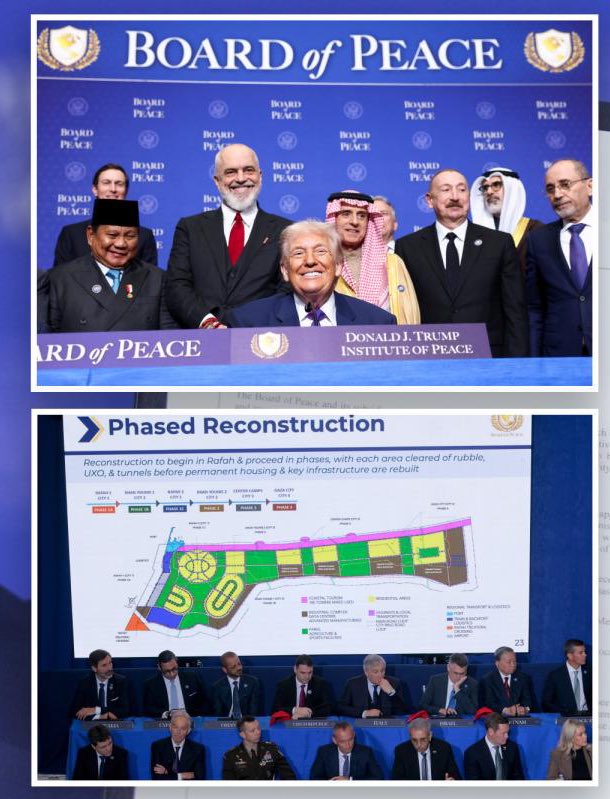
Political observers note that this announcement comes at a time of heightened tension in global affairs, with several regions experiencing instability. Trump argued that waiting for congressional negotiations would “waste critical time,” claiming that executive authority gives him flexibility during what he described as “national security emergencies.”
The term “Board of Peace” itself has raised questions. The administration has not yet released formal documentation detailing its structure, leadership, or operational framework. It remains unclear whether this board would operate under an existing federal agency or function as a newly established independent body.
Some constitutional scholars suggest Trump may attempt to rely on emergency powers or reallocate funds from previously approved defense budgets. However, such reallocation would still likely face scrutiny and possible court injunctions.
Financial markets reacted cautiously following the announcement. While there was no immediate crash or surge, defense-related stocks showed minor volatility as investors weighed the implications of redirecting funds.
Critics argue that even if the initiative is well-intentioned, bypassing Congress sets a concerning precedent. “You cannot simply declare a $10 billion expenditure without legislative oversight,” one constitutional expert said during a televised panel discussion. “The system of checks and balances exists for a reason.”
Supporters of Trump, however, praised the move as decisive leadership. They argue that lengthy congressional gridlock often stalls urgent policy measures and that strong executive action is sometimes necessary to move swiftly on global matters.
The White House has indicated that additional details will be released in the coming days, including possible appointments to the Board of Peace. Speculation is already swirling about who might lead the initiative, with some suggesting former diplomats or military officials could be tapped.
Meanwhile, legal advocacy groups are reportedly preparing potential challenges, signaling that this battle may soon move from the political arena into the courtroom.
As the debate intensifies, one thing is clear: this announcement has ignited a fierce national conversation about executive power, constitutional limits, and America’s role in global diplomacy.
Whether the “Board of Peace” becomes a historic diplomatic innovation or a constitutional flashpoint now depends on how Congress, the courts, and the public respond in the coming days.


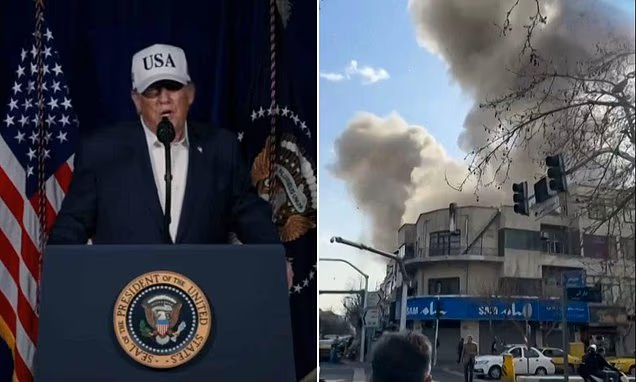
BREAKING: Iran attacks US 5th fleet in Bahrain after Trump launched ‘massive’ US and Israeli attack on Iran

Donald Trump is issuing an executive order declaring a “national emergency” to give himself unprecedented powers over elections. The order could allow him to interfere with voting ahead of the midterm elections.

BREAKING: Donald Trump is reportedly “raving mad” that Democrats will be broadcasting a live feed of his SOTU speech tonight from a thermal camera that shows if he poops himself, and is furious that this “Trump Dump Detector” could get more viewers than the regular broadcast.

BREAKING: The Republicans deposing Bill and Hillary Clinton over the next two days are reportedly extremely nervous because Donald Trump—very out of character—hasn’t said a word about it, and they’re afraid the Clintons’ answers might lead to the end of Trump’s presidency.

At the 2026 State of the Union, Sen. Markwayne Mullin Tries to Snatch Rep. Al Green’s “Black People Aren’t Apes” Sign Referencing Donald Trump’s Truth Social AI Post Depicting the Obamas as Apes — Green Files Criminal Assault Charges, Says Mullin “Doesn’t Like the Truth Seeping Through,” and Claims His Explanation Shows He’s Desperate to Please Trump

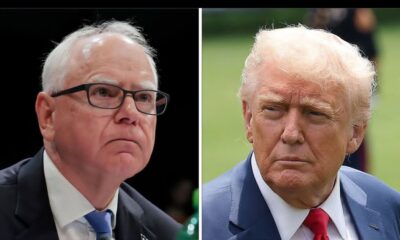
JUST IN: Minnesota Gov. Tim Walz calls for the U.S. to pass a law requiring that when Congress votes to go to war, an immediate family member of each member of Congress must immediately be enlisted. See Trump’s Enraged 6-Words Reaction

Appointed AG Jack Smith had 86 witnesses ready to covict Donald Trump for attempting a goddamn coup and all of them were Republicans. His report was then blocked by Trump appointed Judge Aileen Cannon.

BREAKING: Taylor Swift and Travis Kelce’s Secret Vacation in Mexico Turns Tragic in Puerto Vallarta as Mexican Cartel Sets Fires, Pulls People from Their Cars, and Burns Vehicles After a Cartel Leader Was Killed — With Heavy Hearts, Sources Confirm the Couple Has Been…

JUST IN: Greenland PM Jens-Frederik Nielsen says: “President Trump’s idea to send a US hospital ship here to Greenland has been duly noted. But we have a public health system where care is free for citizens.”

JUST IN: Denmark just officially rejected President Trump’s sudden deployment of a “great hospital boat” to Greenland, bluntly declaring the territory does not need foreign healthcare

BREAKING: Top GOP pollsters warn that if Trump keeps tariffing the world, and starts a war in Iran, and doesn’t arrest any other Epstein pedophiles, and keeps stealing billions of tax dollars, “The Dems will win enough Senate seats to impeach him and JD for President Jeffries.”
