
NEWS
Donald Trump is issuing an executive order declaring a “national emergency” to give himself unprecedented powers over elections. The order could allow him to interfere with voting ahead of the midterm elections.

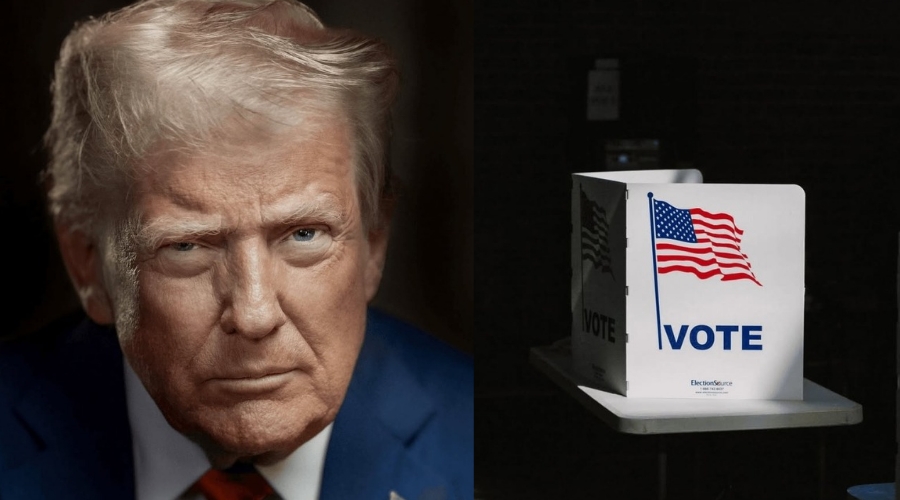
The political atmosphere in Washington has taken a dramatic turn as reports emerge that Donald Trump is preparing to issue an executive order declaring a “national emergency” related to U.S. elections. According to sources familiar with the discussions, the move could grant the president expanded authority over aspects of the election system just months before the midterm vote — a development that is already igniting fierce legal and political debate across the country.
Presidents do have the authority to declare national emergencies under federal law, typically in response to extraordinary threats involving national security, economic stability, or foreign interference. Once declared, a national emergency can unlock specific statutory powers that Congress has previously authorized. However, applying that authority to election administration would be highly unusual and, critics argue, unprecedented in modern American politics.
Supporters of the proposed order are framing it as a necessary step to protect election integrity. They point to longstanding concerns about cybersecurity vulnerabilities, foreign influence campaigns, and alleged irregularities in past elections. From their perspective, elevating election security to emergency status would allow for stronger coordination between federal agencies, expanded oversight of digital infrastructure, and potentially more aggressive enforcement measures through the Department of Justice.
Opponents, however, are sounding alarms. Under the U.S. constitutional system, states have primary authority over administering elections. Secretaries of state, county officials, and local boards manage voter registration, polling places, ballot counting, and certification. Any attempt by the executive branch to significantly interfere with or override that structure would likely face immediate court challenges. Legal scholars emphasize that while emergency powers exist, they are not unlimited, and courts often act swiftly when election laws are altered close to voting periods.
The timing of this reported move adds to the intensity of the reaction. Midterm elections traditionally serve as a referendum on the sitting administration, with control of Congress often hanging in the balance. Even the perception that the White House could influence the mechanics of voting may heighten political tensions and deepen partisan divides. In an already polarized environment, questions about fairness and legitimacy carry enormous weight.
If an executive order is signed, legal action would almost certainly follow within hours. Civil rights organizations, voting advocacy groups, and state governments could seek injunctions to block its implementation. Federal judges would then have to determine whether the emergency declaration falls within the scope of authority granted by Congress or whether it infringes on constitutional protections reserved for the states. Past election-related rulings suggest that courts prioritize stability and clarity for voters, particularly as Election Day approaches.
Beyond the courtroom, the political ramifications could be just as significant. Lawmakers in Congress may respond with hearings, legislative countermeasures, or public statements challenging the legitimacy of the move. At the same time, supporters could argue that extraordinary measures are justified if they believe the integrity of the voting system is at stake. The debate would likely dominate national headlines, shaping campaign messaging and voter turnout strategies on both sides.
Historically, emergency declarations have been used for matters such as sanctions, national security threats, and disaster response. Expanding that framework into election oversight territory would test not only legal boundaries but also public trust in democratic institutions. Much of the impact may hinge less on what specific powers are activated and more on how voters interpret the intent behind the action.
For now, the order has not yet been formally issued, and key details remain unclear. What is clear, however, is that any move to declare a national emergency over elections would trigger one of the most consequential constitutional debates of this political cycle. With the midterms approaching, the country may soon find itself grappling not just with campaign issues and partisan competition, but with fundamental questions about the limits of executive power and the structure of American democracy itself.

BREAKING: Donald Trump Addresses the Nation After Being Impeached and Removed from Power

BREAKING: Iran attacks US 5th fleet in Bahrain after Trump launched ‘massive’ US and Israeli attack on Iran

Donald Trump is issuing an executive order declaring a “national emergency” to give himself unprecedented powers over elections. The order could allow him to interfere with voting ahead of the midterm elections.

BREAKING: Donald Trump is reportedly “raving mad” that Democrats will be broadcasting a live feed of his SOTU speech tonight from a thermal camera that shows if he poops himself, and is furious that this “Trump Dump Detector” could get more viewers than the regular broadcast.

BREAKING: The Republicans deposing Bill and Hillary Clinton over the next two days are reportedly extremely nervous because Donald Trump—very out of character—hasn’t said a word about it, and they’re afraid the Clintons’ answers might lead to the end of Trump’s presidency.

At the 2026 State of the Union, Sen. Markwayne Mullin Tries to Snatch Rep. Al Green’s “Black People Aren’t Apes” Sign Referencing Donald Trump’s Truth Social AI Post Depicting the Obamas as Apes — Green Files Criminal Assault Charges, Says Mullin “Doesn’t Like the Truth Seeping Through,” and Claims His Explanation Shows He’s Desperate to Please Trump

JUST IN: Minnesota Gov. Tim Walz calls for the U.S. to pass a law requiring that when Congress votes to go to war, an immediate family member of each member of Congress must immediately be enlisted. See Trump’s Enraged 6-Words Reaction

Appointed AG Jack Smith had 86 witnesses ready to covict Donald Trump for attempting a goddamn coup and all of them were Republicans. His report was then blocked by Trump appointed Judge Aileen Cannon.

BREAKING: Taylor Swift and Travis Kelce’s Secret Vacation in Mexico Turns Tragic in Puerto Vallarta as Mexican Cartel Sets Fires, Pulls People from Their Cars, and Burns Vehicles After a Cartel Leader Was Killed — With Heavy Hearts, Sources Confirm the Couple Has Been…

JUST IN: Greenland PM Jens-Frederik Nielsen says: “President Trump’s idea to send a US hospital ship here to Greenland has been duly noted. But we have a public health system where care is free for citizens.”

JUST IN: Denmark just officially rejected President Trump’s sudden deployment of a “great hospital boat” to Greenland, bluntly declaring the territory does not need foreign healthcare
