
NEWS
Appointed AG Jack Smith had 86 witnesses ready to covict Donald Trump for attempting a goddamn coup and all of them were Republicans. His report was then blocked by Trump appointed Judge Aileen Cannon.

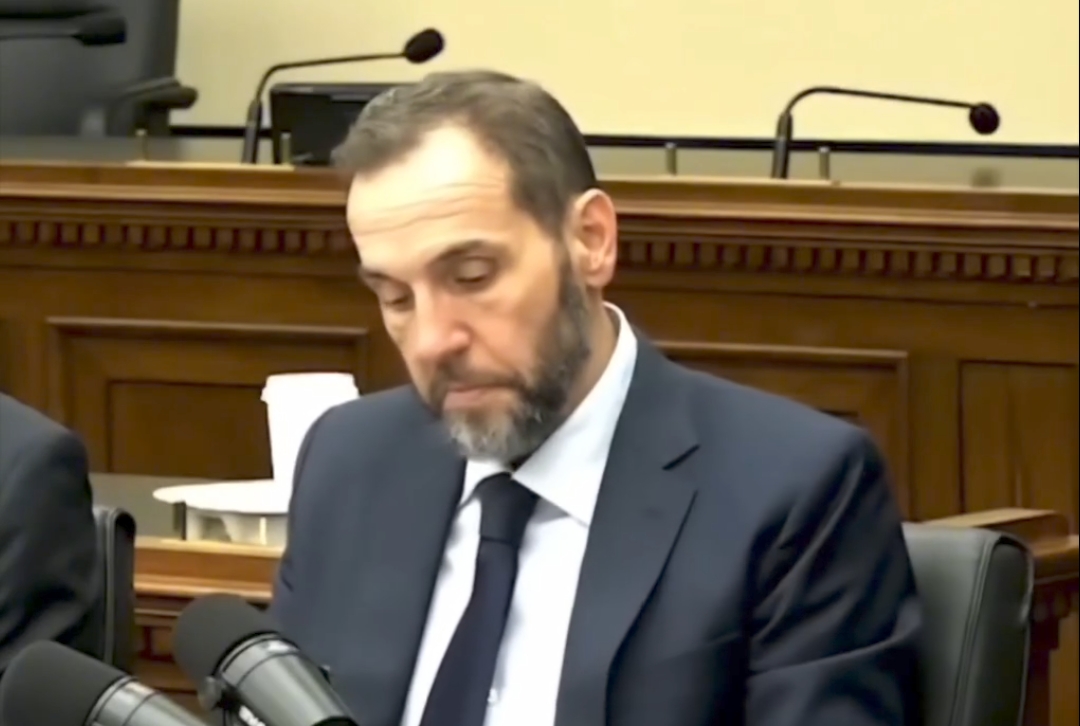
The political firestorm surrounding former President Donald Trump has taken yet another dramatic turn, and this time the spotlight is on Special Counsel Jack Smith and a staggering claim: that 86 witnesses — reportedly all Republicans — were prepared to testify in a case alleging that Trump attempted to overturn the 2020 election. Even more explosive? The assertion that a report detailing those findings was blocked by a judge appointed by Trump himself, Aileen Cannon.
The controversy centers on investigations led by Smith into Trump’s actions following the 2020 presidential election, including efforts to challenge or reverse the results that ultimately confirmed Joe Biden as the winner. Prosecutors examined a wide range of events — from pressure placed on state officials to the events surrounding January 6, 2021, when supporters of Donald Trump stormed the U.S. Capitol.
At the heart of this developing narrative is the claim that Smith’s team had assembled testimony from 86 witnesses, all allegedly Republicans, prepared to support charges that Trump knowingly attempted to subvert the election results. If accurate, such a lineup would carry enormous political weight. Republican voices testifying against a Republican former president would challenge the idea that the investigation was purely partisan — a claim frequently made by Trump and his allies.
Trump has consistently denied any wrongdoing. He has argued that his actions were within his rights as a candidate contesting an election he believed was flawed. His supporters echo that argument, maintaining that the investigations are politically motivated attempts to damage him as he seeks a return to the White House.
But the legal battle has been anything but straightforward.
Judge Aileen Cannon, appointed to the federal bench by Trump in 2020, has played a significant role in related proceedings. Her rulings in cases connected to Trump have sparked debate among legal experts, with critics arguing that some decisions have favored the former president. Supporters, however, insist she is simply applying the law as she interprets it, regardless of political pressure.
The claim that Cannon “blocked” a report from Smith has added fuel to an already raging political debate. Legal observers note that disputes over the release of investigative reports are not uncommon in high-profile federal cases. Questions of executive privilege, grand jury secrecy, and procedural fairness often shape what becomes public and when.
Still, the optics are powerful. A special counsel preparing dozens of witnesses. A former president facing unprecedented legal scrutiny. A judge appointed by that same president making key rulings. For many Americans, the situation feels historic — and deeply polarizing.
It is important to understand that investigations of this magnitude move through complex legal channels. Indictments, motions, appeals, and procedural rulings can significantly affect timelines and outcomes. Allegations alone do not equate to convictions, and every defendant — including a former president — is entitled to due process.
The broader political implications are undeniable. Trump remains one of the most influential figures in American politics. Any legal development involving him reverberates across party lines, campaign strategies, and voter sentiment. Meanwhile, the role of the judiciary in politically sensitive cases continues to be scrutinized intensely by both sides.
Supporters of the special counsel argue that accountability must apply equally, no matter how powerful the individual. Critics argue that the justice system is being weaponized in the political arena. Both perspectives highlight the extraordinary stakes involved.
As legal proceedings continue to unfold, what remains clear is that the investigation led by Jack Smith represents one of the most consequential legal chapters in modern American history. Whether the claims about 86 Republican witnesses and a blocked report ultimately reshape public opinion — or court outcomes — is something that will play out in the months ahead.
For now, the case sits at the intersection of law and politics, a reminder that in the United States, even former presidents can find themselves at the center of historic legal battles.
And yet, beneath the legal filings and heated television debates, a deeper question lingers: what would it mean for the country if those 86 witnesses truly were prepared to testify — and if their accounts were as damning as some claim?
Legal analysts point out that the strength of any prosecution does not rest solely on the number of witnesses, but on credibility, consistency, and documentary evidence. If a large group of insiders — particularly members of the same political party — were willing to testify under oath, that could significantly shape how a jury interprets intent and knowledge. Intent, in cases involving alleged attempts to overturn election results, is often the most difficult element to prove.
For Special Counsel Jack Smith, the stakes have always been enormous. Appointed to conduct independent investigations, his mandate was to follow the evidence wherever it led. Prosecuting a former president — especially one actively campaigning — is unprecedented territory in modern U.S. history. Every motion filed and every decision made is dissected in real time by legal scholars, political strategists, and voters alike.
On the other side stands Donald Trump, who continues to frame the investigations as part of a broader political witch hunt. He has repeatedly insisted that his actions after the 2020 election were lawful challenges to what he believed were irregularities. To his base, the legal scrutiny reinforces their perception that powerful institutions are aligned against him. To his critics, the investigations represent necessary accountability for conduct they view as a threat to democratic norms.
Then there is Judge Aileen Cannon, whose rulings have placed her squarely in the public spotlight. Federal judges are tasked with interpreting the law and ensuring that constitutional protections are upheld, even in cases carrying extraordinary political weight. Yet when the defendant once appointed the judge presiding over key matters, perceptions of impartiality inevitably become part of the public conversation — regardless of the legal reasoning behind specific decisions.
If a report was indeed restricted or delayed, legal experts note that such actions can stem from procedural considerations — including protecting grand jury material or safeguarding rights during ongoing litigation. Still, in the court of public opinion, timing often matters as much as substance. With an election cycle looming, any perceived delay or suppression becomes politically charged.
The broader narrative unfolding is not just about one man, one prosecutor, or one judge. It is about how institutions function under strain. The justice system was designed to operate independently of political pressure, yet cases involving high-ranking officials inevitably test that principle. Transparency, fairness, and due process remain essential pillars — even when emotions run high.
As Americans watch the case develop, they are witnessing something rare: the legal system grappling with allegations that touch the very foundation of electoral democracy. Regardless of political affiliation, the outcome will likely influence how future generations view the balance between executive power and accountability.
In the end, courts — not headlines — will determine the legal consequences. Evidence will be weighed. Arguments will be challenged. Appeals may follow. And history will record not just the verdict, but how the system handled one of the most politically sensitive investigations in modern times.
For now, the questions remain suspended in the national conversation. Were 86 Republican witnesses truly ready to testify? What exactly did their statements contain? And how will procedural rulings shape what the public ultimately sees?
Those answers will not come from speculation — but from the slow, deliberate machinery of the law.
City CEO Sends Staff a Video: “We’ll Fight the Premier League With Every Legal Avenue”
Panthers Drop Nearly $100 Million on Offensive Line in 2026 and Bryce Young Is STILL Getting Sacked and Pressured on Almost Half His Dropbacks — Fans Are Furious Over the Massive Waste

🚨 BREAKING: Chiefs–Dolphins Game Faces Major Late Twist as Kansas City Makes Stunning Game-Day Announcement — NFL Fans Left Stunned
Taylor Swift Gives Shocking Reasons Behind Her Decision to End Her Few-Month Marriage to Travis Kelce — “I Never Expected This”

BREAKING: Kansas City Chiefs TE Travis Kelce Has Just Announced His Retirement at Arrowhead Stadium — But His Emotional Message to Taylor Swift Is What Has Everyone Talking…
Heartbreaking news out of the NFL. Monday’s Chiefs vs. Colts clash is officially postponed after the confirmed passing of a key player. 💔 Full story here:
🚨 BREAKING — SHOCKING SCENARIO AS U.S. PRESIDENT DONALD TRUMP IS REPORTED DEAD
Shockwaves in Kansas City: Travis Kelce Calls It a Career
🚨 BREAKING: Travis Kelce Declared Lifeless Just Minutes After Chiefs’ Victory Over Broncos
BREAKING NEWS: Kansas City Chiefs Mourn the Passing of Head Coach Andy Reid

OFFICIALLY CONFIRMED: Taylor Swift Reveals the Shocking Reason Behind the End of Her One-Week Marriage to NFL Star Travis Kelce
